A Step-by-Step Guide on Google Contacts Backup
This article offers comprehensive guidance on Google contacts backup, as well as how to back up contacts with Gmail. It explains multiple approaches to backing up Google contacts, including both manual and automated techniques. It also covers how to troubleshoot common issues during backup, as well as approaches to restoring contacts in a Google account.
[content]
For individuals and businesses alike, contacts are often among the most critical types of asset stored in online platforms, including Google. They’re also an asset that can be lost permanently due to various issues – such as accidental deletion, syncing errors when using a Google account across multiple devices and application misconfiguration.
This is why it’s critical to have a Google contacts backup solution in place. Knowing how to back up contacts with Gmail and other Google platforms helps ensure that the information you need to get in touch with coworkers, employees, customers and more is always safe, even if a problem occurs with Google’s service or your contacts are lost due to software problems.
Fortunately, multiple approaches are available for Google contacts backup data. Read on for guidance as we walk through the various methods, while also explaining how to troubleshoot common problems and restore contacts to a Google account from a backup.
Why Google Contacts Backup Matters
Let’s start by discussing why backing up Google contacts is so important.
You may think that contact data stored on a platform like Google Workspace or Gmail would be safe from data loss. Yet, although it’s true that Google’s services are very reliable, with very rare reports of downtime or infrastructure failures, it is nonetheless possible to lose contact data permanently.
Accidental deletion
As mentioned above, you could accidentally delete a contact, with no way to recover it – and note that accidental deletion could occur not just because of user error, but also due to incidents like a social engineering attack (which accounts for 17 percent of all breaches) in which a threat actor posing as IT staff tricks an employee into removing data.
Syncing errors
Or, syncing errors could cause contacts stored on one device to disappear from your online account. Configuration errors or software bugs in applications that access Google contacts data could also potentially cause a contact entry, or some of the information within it, to be lost.
In total, 49 percent of businesses report having lost data from Google Workspace and other SaaS apps – a statistic highlighting just how prone information like contacts can be to data loss, despite being stored on well-managed platforms.
Legal Requirements
In many cases, losing contacts is more than just annoying. It can have direct business ramifications if, for example, a sales team can no longer reach a customer. There may also be compliance implications in the event that a compliance framework, such as GDPR or HIPAA, requires your organization to secure and protect personally identifiable information, which may be reasonably interpreted to include contact data.
Sync is not a backup
Note, too, that even if your contact data is synced automatically between devices, there’s no guarantee that it’s safe. Deleting a contact from one device will cause the contact to be removed from other devices, too. Plus, syncing is not the same thing as backup because syncing doesn’t provide additional capabilities, such as versioning and export control, that are hallmarks of a complete backup solution.
Financial Impact of Data Loss
Finally, while you can hire firms to apply a Google Contacts backup solution in the event that data are lost, however creating your own backups is a much more cost-effective approach in most cases. It costs, on average, $222.50 to restore a contact using an external service provider – a number that can translate to millions of dollars in recovery costs if you have thousands of contacts to restore.
5 Ways for Google Contacts Backup
Now, let’s look at ways to go about Google contacts backup data. This section covers five different approaches, explaining the pros and cons of each one.
Method 1: Automatic Syncing with Your Google Account
One approach to safeguarding contacts in a Google account is to set up automatic syncing for your Google accounts data. As we mentioned above, this isn’t a true Google Contacts backup solution because it doesn’t provide features like the ability to save multiple versions of a contact. But it does provide some degree of protection by ensuring that contacts data is copied across multiple devices – so if one device fails, contacts will remain available elsewhere. What Auto-Sync Protects And What It Doesn’t Before choosing auto-sync as a backup method, it’s important to understand the types of data that this feature doesn’t protect. Key limitations include:
- Auto-sync doesn’t cover device-only or SIM card contacts.
- Auto-sync doesn’t store multiple contact versions or enable point-in-time restores.
- Sync problems or user errors can cause “silent” contact loss, meaning that contact data stored on one device will be missing from others.
Enable Contact Sync on Android Devices
If you understand the limitations and want to use auto-sync to protect contacts, here’s how to set it up on an Android device:
- Open Settings.
- Tap Google.
- Tap Settings for Google Apps > Google Contacts Sync.
- Toggle Automatically back up & sync device contacts.
- Tap Status to verify sync is active.
- Select the correct Google Account.
Enable System-Wide Google Drive Backup
It’s also possible to enable auto-sync by turning on the Google Drive backup feature. This syncs local folders and files that are connected to Google Drive across all connected devices.
To set up auto-sync through Google Drive, follow these steps:
- Go to Settings > System > Backup.
- Enable Back up to Google Drive.
- Confirm that Contacts is included in the backup scope.
Method 2: Exporting Google Contacts Manually
Another approach to Google contacts backup is to export contacts data manually via Google’s Web or mobile interface. This can be a tedious process, and it’s not a great solution if you need to back up contacts data regularly. But for one-off backups, it may suffice.
The way to back up contacts manually varies depending on which interface you use to access your Google accounts.
Export via Google Contacts Website
To manage accounts data via Google’s Web interface (which will work in any browser), follow these steps:
- Visit contacts.google.com.
- Select contacts to back up. You can select all contacts, or just certain ones. You can also filter by label.
- Click More actions (⋮) > Export.
- Choose a backup format:
- Google CSV: for re-import into Google
- vCard (.vcf): for Apple, iOS, universal use
- Click Export and save. Tip: For large address books (>3,000 contacts), consider exporting by label or in smaller batches to prevent browser timeouts or incomplete downloads.
Export via Android Contacts App
If you use the Android Contacts App, you can back up contacts using these steps:
- Open the Contacts app
- Tap Fix & manage > Export to file
- Choose account
- Tap Export to .VCF file
- Save to cloud or secure local storage
Best Practices for Manual Google Contacts Backup
No matter which interface you use to Google Contacts Backup manually, the following best practices can help ensure a reliable and efficient backup process:
- Store backups in encrypted cloud folders, using services such as Drive, OneDrive, Dropbox). This helps prevent unauthorized access to contact data.
- Avoid keeping files in Downloads or other unsecured locations on a device.
- Use timestamps in filenames for version control. This makes it easier to revert to an earlier version of a contact if necessary.
Method 3: Back Up All Contacts Using Google Takeout
Google Takeout is a tool that allows you to download data from your Google accounts and save it as a file. Using this approach, you can store a copy of contacts data on a local file system. You can also copy the file to an external hard drive or the cloud, if you want to increase reliability.
A downside of this approach is that, like manually exporting contact data from the Web interface or the Android Contacts App, using Takeout can be tedious if you need to create copies of your contacts on a frequent basis.
Export Only Google Contacts Using Takeout
To use Takeout to make a copy of contacts data (and avoid copying other types of data, which Takeout also supports), follow these steps:
- Go to takeout.google.com.
- Deselect all > enable Contacts.
- Choose export frequency, format (.zip or .tgz – note that .tgz can be more efficient, but .zip is more commonly supported across all types of operating systems) and destination.
- Download archive and store securely.
Method 4: Sync Google Contacts Across Devices
We explained above how to sync contacts data across devices by enabling auto-syncing for your Google account. A variant on this approach is to sync just your contacts (as opposed to all account data) between devices. Syncing just your contacts can be faster. It also reduces the amount of storage space tied up on each device.
Below are instructions for setting up syncing for contacts on various types of devices.
Sync with iPhone/iOS
On an iPhone or other iOS device, set up contacts syncing as follows:
- Open Settings > Mail > Accounts > Add Account > Google.
- Toggle Contacts ON to enable syncing.
- Contacts will appear in the native Contacts app.
Sync with macOS
On macOS workstations or laptops, follow these steps:
- Open System Preferences > Internet Accounts > Add Google.
- Enable Contacts for sync.
Sync with Windows
On Windows, follow these steps:
- Open Settings > Accounts > Email & App Accounts.
- Add your Google account.
- Confirm that Contacts sync is enabled.
Method 5: Business-Grade Backup with MSP360 for Google Workspace
The contacts backup methods described above may work well enough if you only need to back up contacts periodically, and if you don’t mind devoting considerable time to the process.
But if you want an efficient, scalable backup solution that protects all of your contacts data by creating copies of it on an automated schedule, consider a business-grade backup solution like MSP360 for Google Workspace. MSP360 fully supports the backup of contacts and virtually all other types of data stored on Google accounts.
Why Use MSP360 Backup Instead of Native Tools
Compared to using Google’s native tools or features for backing up contacts data, an automated solution like MSP360 offers SaaS backup solution with several key benefits:
- True backup: Unlike sync-based approaches to data protection, MSP360 offers true data backup, with versioning and export control built in.
- Complete data coverage: In addition to backing up contacts, MSP360 can also protect data stored in Gmail, Google Drive, Google Calendar and other popular Google services.
- Advanced features: MSP360 offers capabilities such as scheduled backups, incremental backups (which save time and storage space by backing up only the data that has changed since the previous backup) and enabling point-in-time restores.
- Security: With security features including AES-256 encryption, role-based access controls and audit logging, MSP360 keeps backup data safe.
- Compliance-friendly: MSP360 is compliant with major regulations, including GDPR, HIPAA, ISO 27001 and more.
How MSP360 Handles Contacts
MSP360 offers more than just a Google Contacts backup solution. MSP360 provides granular control over backups, making it possible to back up contacts for specific users, teams or the entire organization.
It also enables automated restores, so you can easily repopulate a Google account with contact data – or import contacts from a different account, if desired. Note, too, that you can restore contacts data even after Google’s 30-day “undelete” period has expired, as long as you created backups with MSP360 that precede that cutoff. And, because MSP360 provides a full log that details backup and restore operations, you’ll be able to confirm that all data was successfully backed up and recovered.
[readmore] How to backup Google Contacts with MSP360
How to Restore a Google Contacts Backup
The process for restoring Google contacts data from a backup can vary depending on which backup method you chose. Following is a look at common approaches.
Option 1: Use Undo Changes (Web)
If you accidentally deleted a contact within the previous thirty days, you can restore the data by using Google’s “undo changes” feature. Access it as follows:
- Go to contacts.google.com.
- Click Settings (⚙) > Undo changes.
- Select rollback window (up to 30 days).
- Confirm and apply. Warning: Any new contacts added after the rollback point will be removed by this process – so, while this may allow you to recover deleted contacts, it could delete other contacts in the process.
Option 2: Use Trash in Google Contacts App
It’s also possible to undelete a recently removed contact by taking it out of the “trash” within the Google Contacts App. Here’s how to do it:
- Open the Google Contacts app.
- Tap Menu (☰) > Trash.
- Select individual or multiple contacts.
- Tap Restore.
- Ensure auto-sync is enabled under Settings > Google > Contacts sync.
Unlike “undo changes,” this won’t remove newly added contacts. It only restores selected contacts from the trash. In general, however, you can only recover contacts that have been in the trash for less than 30 days.
Option 3: Restore via Android Settings
On Android devices, a feature is available under Settings for restoring contacts. Access it as follows:
- Go to Settings > Google > Set up & restore > Restore contacts.
- Choose Google account and device.
- Optional: toggle off SIM or device storage restore.
- Tap Restore.
Note that Google will only restoremissing contacts to avoid duplicates. Also, restore will fail if you’re attempting to restore contacts on a device that is running an older Android version than the device where the contacts originated.
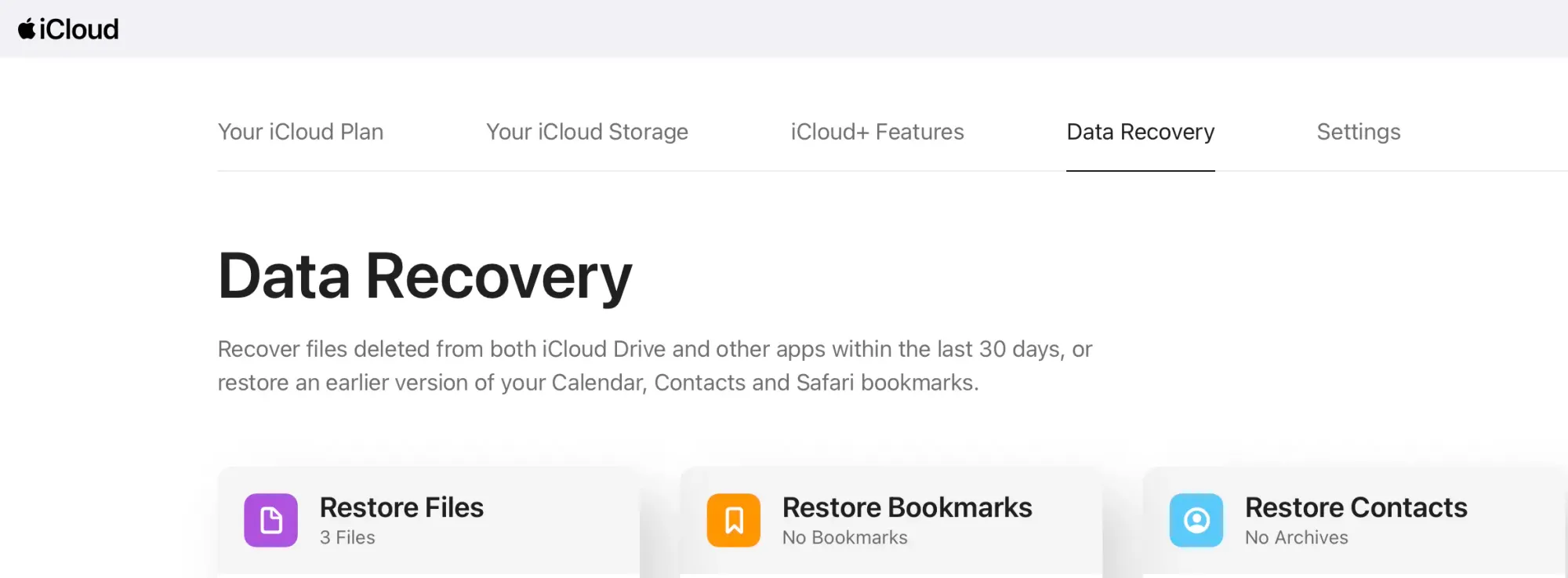
Option 4: Restore iPhone Contacts
On an iPhone or other iOS device, you can restore contacts as follows:
- iCloud:
- Settings > [Your Name] > iCloud > Contacts ON.
- iTunes/Finder:
- Connect iPhone > open Finder or iTunes.
- Select device > click Restore from Backup.
Option 5: Restore from MSP360 Backup for Google Workspace
If you backed up your contacts using MSP360 Backup for Google Workspace, you can restore the data in a few clicks, including item-level, folder-level, and individual-level.
[readmore] How to restore Google Contacts with MSP360
Google Contacts Backup Import (Mobile or Web)
If you want to import contacts from a backup file into a new device (as opposed to restoring them to the same device or account), you can do so using either the Contacts App or the Web.
Import via Contacts App
With the Contacts App, you can import a backup file using these steps:
- Open the Google Contacts app.
- Tap Menu (☰) > Settings > Import.
- Choose the file to import. You can select a .vcf file or SIM card.
- Select destination account.
- Follow prompts.
Import via Web
In a Web browser, you can import contacts into an account as follows:
- Go to contacts.google.com.
- Click Fix & manage > Import.
- Upload a .csv or .vcf file.
Troubleshooting and Common Issues
Various problems may arise during the process of Google Contacts backup or restoring contacts. Here are common issues and tips on solving them.
Failed export
If you can’t export contacts to a file, it may be because of browser compatibility. Try using a different browser. Exports may also fail if you’re trying to export a very large number of contacts at once, in which case breaking it into smaller batches may work better.
Contacts missing
If you’re missing contacts following a backup, the most likely cause is that they are not synced across all of your devices and you performed the backup from a device that doesn’t contain the data. To fix this, ensure that your contacts are fully synced across devices.
Duplicates
Duplicate contacts usually result from simply having duplicate contact entries. You can consolidate them using Google’s merge feature.
Failed restores
The most common cause of failed contact restores is incompatibility between device versions or operating systems. For best results, ensure that you’re restoring contacts using the same device and OS version as you used to create the back up.
Google Takeout archive won’t open
Backup files created using Google Takeout may need to be extracted with an unzip utility. If you still have issues, try using a different backup format (like .tgz instead of .zip) when creating the backup in Takeout.
Google Contact Backup FAQs
Is syncing the same as backing up contacts?
No. Syncing simply copies the most recent version of contacts between devices. It doesn’t provide true backup capabilities, such as the ability to manage multiple versions of a contact. It also doesn’t protect against risks like accidental data deletion (because if you delete a contact from one device, it will be automatically deleted on synced devices as well).
Can I Restore Contacts from My SIM Card?
For contacts stored on a tablet or phone, you can typically restore them from the device’s SIM card as long as they were saved to the SIM card (and not a local folder on the device itself). Note, however, that SIM cards only store basic contact information (such as names and phone numbers), not data like emails or notes. In addition, attempting to use a SIM card to restore contacts from an iOS device to an Android device, or vice versa, may not work well due to software compatibility issues.
To recover contacts stored on a SIM card, insert the card into your device, then open the Contacts app. From there, select the option to import contacts from a SIM card.
Can I restore contacts from 60 days ago?
Typically, you can only restore contacts from 60 days ago if you have a backup file available that was created at that time. Google itself only supports undeletion within a 30-day window.
How do I back up contacts from multiple Google accounts?
To do this, you need a backup solution that includes cross-account support, such as MSP360 Google Workspace Backup. It may also be possible in some cases to export contacts manually using a file format like .vcf, then import them manually into a new account, although differences in operating system and device versions can make this approach unreliable.
Are contacts from WhatsApp or Telegram backed up?
This depends on which backup approach you use. Native Google tools only back up contacts data that is stored natively within Google accounts. To ensure that you also back up contacts stored in other apps, you’ll need a backup solution that supports those apps.
Can I migrate contacts to a different Google account?
Yes, you can migrate contacts via different ways:
- Export/import via CSV or VCF
- Sync across devices or accounts
- Using third-party backup solutions (e.g., MSP360 Backup for Google Workspace)
Is there a way to restore only contacts created before a specific date?
You can do this by selecting a backup file that corresponds to the desired date, if you use a backup solution that supports point-in-time recovery.
The Bottom Line on Google Contact Backup
In short, you can’t afford to leave your Google contacts data vulnerable to risks like accidental deletion, misconfiguration or device loss. And, while Google offers basic syncing and restore options, they’re not enough on their own to enable scalable, reliable, secure backup. True peace of mind comes from version-controlled, centralized backup solutions with built-in security and encryption.
This is where MSP360 Backup for Google Workspace comes in. Whether you’re a solo professional or managing a Google Workspace organization, MSP360 provides the automation, encryption and control you need to ensure your Google contacts Backup process is and protected against all data loss scenarios.
[readmore] Best Microsoft 365 Backup Solutions
[readmore] Best Google Workspace Backup Solutions