

For years, managed service providers (MSPs) have relied on reactive ticket systems - waiting for issues to appear, assigning them manually, and working through an endless queue. But as the complexity of IT environments grows and client expectations rise, that model no longer scales.
The shift underway is toward predictive, AI-driven ticket management. Instead of simply reacting to incoming requests, modern systems are designed to help MSPs anticipate issues, prioritise work intelligently, and resolve problems faster. Platforms focused on AI ticket management for MSPs are playing a growing role in this transition.
The challenge with reactive ticketing
In a traditional setup, MSP teams receive a flood of incoming tickets that need to be categorized, prioritized, and assigned by humans. It's manual, time-consuming, and often inconsistent.
As an MSP scales, three common issues emerge:
- High triage workload. Technicians spend significant time just reading and sorting tickets before they can even start solving problems.
- Inconsistent prioritization. Human judgment can vary - what one technician considers critical, another might not.
- Slow response times. As volume increases, even skilled teams struggle to meet service-level agreements (SLAs) without growing headcount.
This reactive model was fine when client networks were simple. But with hybrid work, cloud applications, and 24/7 uptime expectations, ticket management now demands speed and intelligence that manual triage can't deliver.
How AI changes ticket management
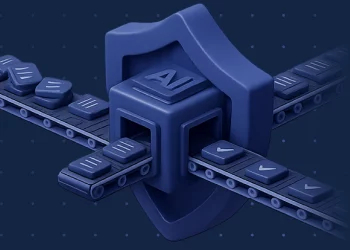
AI brings structure and intelligence to one of the most repetitive parts of the MSP workflow - triage. By combining natural language processing (NLP), machine learning, and predictive automation, AI systems can:
- Interpret ticket text to understand context and urgency.
- Classify tickets automatically into categories (hardware, network, user error, etc.).
- Prioritize based on SLA terms, impact level, and client profile.
- Assign the ticket to the best-fit technician based on skills and workload.
- Recommend next steps or related solutions based on similar past tickets.
When combined with data from PSA tools and broader IT management systems, AI systems can make more informed decisions at the moment a ticket is created - ensuring issues are routed correctly from the start.
In practice, this turns the ticketing platform into an intelligent co-pilot - one that continuously learns from every ticket resolved. The result is less time spent sorting requests and more time spent solving problems.
The move from automation to prediction
Many MSPs already use some form of automation - workflows that assign tickets or send alerts.
But predictive AI goes a step further: it learns from your historical data to anticipate what's likely to happen next.
For example:
- If a client's backup tickets spike every Friday, AI can flag that as a recurring pattern before it escalates.
- If certain keywords indicate a critical outage, predictive systems can automatically escalate to Tier 2 or alert the on-call engineer.
- If ticket volume typically increases after a product update, AI can forecast that trend and prepare resources in advance.
This predictive intelligence transforms service desks from reactive responders into proactive problem solvers.
Real-world impact: efficiency and consistency
At Neo Agent, MSPs using AI ticket triage consistently see improvements in:
- Response time: AI routing ensures every ticket reaches the right person instantly.
- Consistency: AI applies the same logic every time, eliminating "triage fatigue."
- Technician focus: Teams can dedicate more time to complex, high-value tasks.
- Scalability: When ticket volume spikes, automation scales instantly - without increasing staff costs.
It's not just about faster resolution. Predictive ticket management helps MSPs standardize how they handle every request, delivering a more reliable experience for clients.
A more human way to manage tickets
Ironically, the more MSPs automate, the more human their service can feel.
When AI handles repetitive work, technicians can focus on communication, creativity, and problem-solving - areas where humans excel.
Instead of feeling replaced by AI, technicians are supported by it. They gain context faster, receive data-driven recommendations, and spend more time delivering value to clients.
Neo Agent found this balance - between human expertise and machine intelligence - is what defines the most successful MSPs of the next generation.
How to get started with predictive ticket triage
- Start with clean data. Ensure your PSA or helpdesk system uses consistent categories and priorities. AI needs structure to learn effectively.
- Automate small workflows first. Begin by automating categorization and routing before expanding to full prediction.
- Measure results. Track response times, first-time resolution rates, and technician workload.
- Train your team. Help technicians understand how AI supports their work - not replaces it.
Predictive automation isn't an overnight shift. But even modest improvements in triage accuracy or response time can translate into measurable business gains.
The future of ticket management
The next phase of MSP operations will be defined by how well automation and prediction integrate into daily workflows. AI doesn't just make ticketing faster - it makes it smarter.
As systems become more data-driven, the MSPs that thrive will be those who turn their service desks into learning systems - ones that continuously improve with every ticket closed.
In that future, ticket management isn't just reactive support - it's a predictive, strategic function that drives client satisfaction, technician efficiency, and profitability.
Final thoughts
AI-powered ticket management isn't about removing people from the process.
It's about giving MSPs the intelligence, consistency, and foresight they need to meet rising client expectations - without adding more complexity or cost.
At Neo Agent, they believe the future of managed services lies in this combination of automation and anticipation - where every ticket isn't just solved faster, but smarter.